Hundreds of higher education leaders gathered in Washington last week for the ACE Experience 2026 (ACEx2026), confronting the sector’s most urgent challenges at a moment of profound consequence for colleges, universities, and the communities they serve.
ACEx2026—ACE’s largest annual convening, anchored by the 2026 Annual Meeting—brought together presidents and chancellors, senior campus leaders, policy experts, and advocates from across the country and around the globe to examine how higher education can lead through uncertainty while staying grounded in mission and public purpose.
“We will seize this moment. We will not retreat,” ACE President Ted Mitchell told attendees in his State of Higher Education address. “We will move higher education forward to a new future for all of us, for America. And to do that, we must improve, we must innovate, and we must inspire the public.”
Freeman A. Hrabowski III, president emeritus of the University of Maryland, Baltimore County, also helped set the tone for ACEx2026 in his remarks at the convening’s welcome reception.
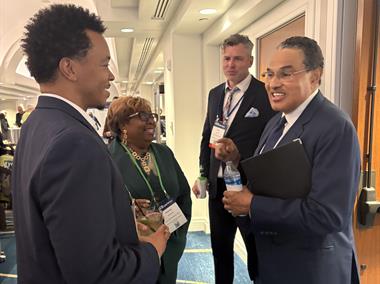
Freeman Hrabowski greets ACEx2026 attendees at Thursday's welcome reception.
“We in higher education represent the public good,” Hrabowski said. “We represent the future of our society. And when we are most depressed or challenged or uncertain, when we can come together and see what people are doing and be inspired by other people, it makes all the difference.”
Throughout ACEx2026, participants explored bold responses to the most pressing policy challenges; exchanged strategies for building agile, future-ready institutions capable of responding to shifting student demographics, emerging technologies, and structural change; and examined how artificial intelligence, workforce alignment, and new learning models are reshaping the pathways to student achievement and lifelong learning.
ACE Board Chair Tom Stritikus, president of Occidental College, reminded campus leaders during the Annual Meeting’s opening main stage session to “take a moment and think about how grateful you must feel to be part of this amazing sector. Whether you're a community college or faith-based institution or a land grant or a regional or research institution, what we do is rather amazing, and to be sure, it's challenged, but it is an incredible opportunity.”
ACE Expands #HigherEdBuildsAmerica Campaign
Across sessions and side conversations alike, a clear throughline emerged: higher education’s future will be shaped not only by the forces acting upon it, but by the leaders willing to act with clarity, collaboration, and courage.
During his opening address, Mitchell unveiled the next phase of ACE’s
Higher Education Builds America campaign, which highlights in concrete terms the positive and wide impact American colleges and universities, along with their students, faculty and staff, and alumni, have across all corners of our nation, and aired
a new video.
“Please know, this is not just ACE’s campaign. This is your campaign,” Mitchell told the hundreds of attendees, hailing from campuses across the country. “We want your voice, we want your stories, and we want your help. Thank you, as always, for all that you to—for your students, and for America.”
Higher Ed Leaders Confront Major Policy Challenges
Attendees grappled with the most pressing policy challenges and opportunities facing higher education, engaging in everything from large plenary discussions to more intimate concurrent sessions designed to foster candid exchange and practical problem-solving.
In his State of Higher Education address, Mitchell outlined the crosscurrents shaping the sector and challenging leaders to respond with clarity and resolve.
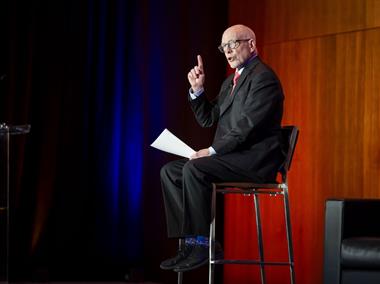
ACE President Ted Mitchell
“We can be proud of our achievements and protective of our freedoms, and we can acknowledge our critics when they’re right,” Mitchell said. “It’s difficult sometimes to imagine holding these ideas in our minds simultaneously. But we have to. To do otherwise would brand us hypocrites and rob us of the moral standing to which we aspire.
“Today let’s make a new promise,” Mitchell continued. “We will seize this moment, not retreat to an imaginary golden past, but to move higher education forward to a new future. For all of us. For America. To do that we must improve, we must innovate, and we must inspire.”
Following his remarks, Arne Duncan, former Secretary of Education, and David Pressman, former Ambassador to Hungary, discussed the rising tide of authoritarianism and its implications for higher education, underscoring the stakes of the current moment.
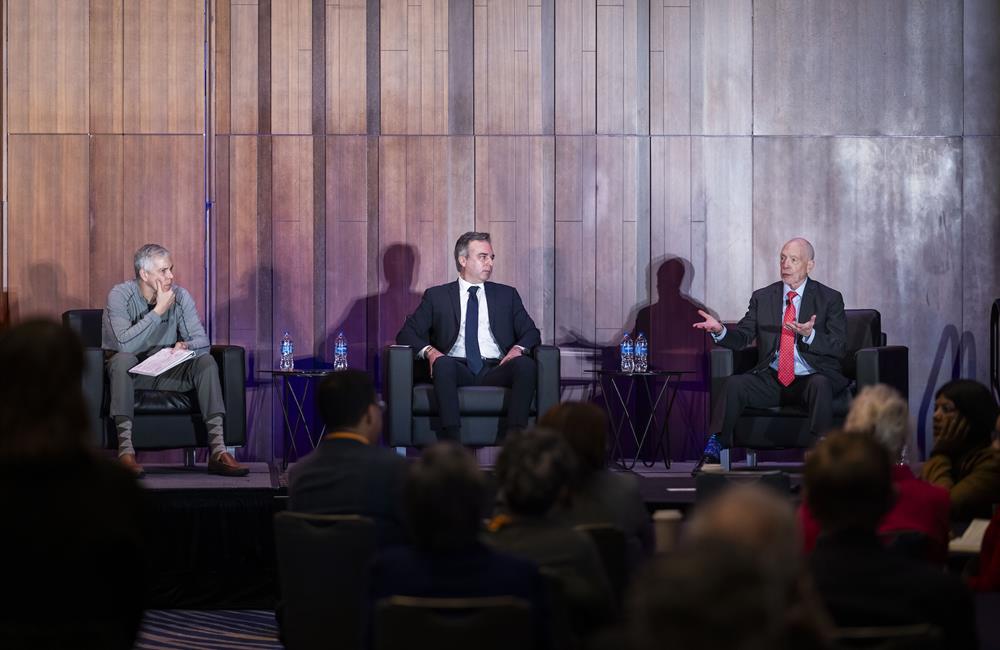
Arne Duncan, managing partner of Chicago CRED and former U.S. secretary of education; David Pressman, former U.S. ambassador to Hungary; and ACE President Ted Mitchell speaking at the session “Truth, Trust, and Leadership: Higher Education’s Inflection Point” on Feb. 26.
Friday’s programming opened with main stage remarks from Nicholas Kent, Under Secretary of Education, who offered the Trump administration’s perspective on federal priorities shaping the sector, particularly stressing the need for institutional accountability in areas such as student outcomes and campus climate.
“I recognize that not everyone in this room will agree with what I have to say today, and some may disagree with my characterizations or with the work that we are doing to improve higher education in this great nation,” Kent said. “I came here expecting that. My goal is not for us to agree on everything, but to ensure that we understand where we see challenges, what steps we are taking to address them, and how we can work together to move forward.”
After Kent’s remarks, Jon Fansmith, ACE’s senior vice president of government relations and national engagement, provided a detailed federal policy outlook and mapped the legislative and regulatory terrain ahead. But first he noted that Kent asserted during part of his speech that college and university leaders need to move through the five stages of grief to acceptance of the Trump administration’s policy changes and proposals. However, noting that Kent also said the administration wants to work together with higher education to move forward, Fansmith said acceptance involves a “partnership, not acquiescence.”
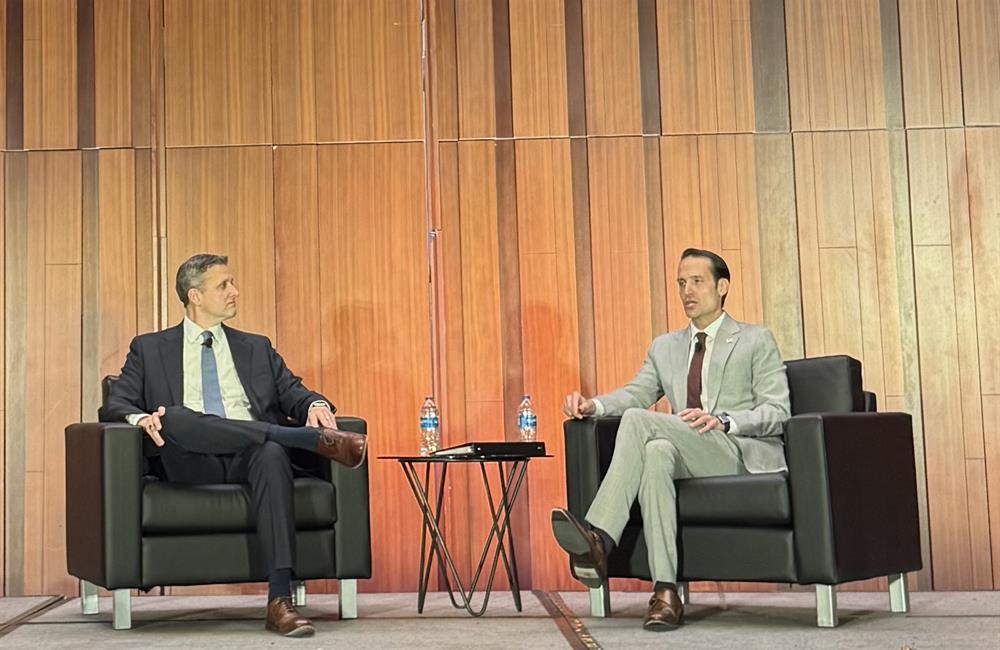
ACE’s Jon Fansmith (left) led a brief Q&A with Nicholas Kent following Kent’s remarks, then delivered his annual policy outlook—responding directly to several of the issues Kent raised.
“Nothing that has happened in the past year is permanent,” Fansmith said, noting a new administration and new Congress will bring new priorities and policies, and that current policies and even legislation that became law can undergo changes or be reversed.
When it comes to current administration proposals on issues such as accreditation, “ACE has been abundantly clear that while we think there are ways to improve accreditation, we do not necessarily see the problems in the same way the administration does, and we don’t always see the solutions, certainly, in the same way the administration does,” Fansmith said.
For instance, when it comes to the role of accreditation and intellectual diversity and where the administration may be headed in a new round of rulemaking, there may be efforts, as there were in the failed Compact initiative, to implement rules around how campuses must ensure intellectual diversity, such as surveying faculty and undertaking third party reviews of curriculum. This would represent federal overreach and intrusion on institutional autonomy, “but their goal is to force accreditors to make those changes, as well to become the agents of that policy,” Fansmith said.
But, Fansmith noted, the recent bipartisan congressional spending bills rejected Trump administration proposals to deeply cut or outright eliminate many financial aid programs and research funding. “That’s the greatest sign for hope that we have going forward,” he said.
Fansmith ended his speech by noting that higher education’s collective voice and continued and consistent outreach to Congress about policies that would do damage to the ability to serve students or prevent students from accessing higher education in the first place is the best and most effective response to harmful proposals.
“This is how we move past acceptance. This is how we advance good policy and defeat bad policy,” Fansmith said.
ACEx2026 Attendees Map Higher Ed’s Road Ahead
Another plenary session featured a panel exploring how general education and credentials are being redesigned to emphasize real world competencies and career readiness.
“Our institutions that we are working with are really thinking about and figuring out how to unbundle their education pathways in really interesting ways,” said Marni Baker Stein, chief content officer of Coursera.
Just in time learning, for instance, is becoming more prevalent in the corporate setting, allowing learners to access relevant content as needed rather than completing lengthy programs, Stein said.
And during another wide-ranging main stage conversation, this one between panelists exploring ideas that cut through convention, Zakiya Smith Ellis, a principal at Education Counsel, raised the proposition that it’s vital for higher education institutions to be serious about quality and accountability that guarantees value and meaningful outcomes for students in order to be eligible to receive public dollars.
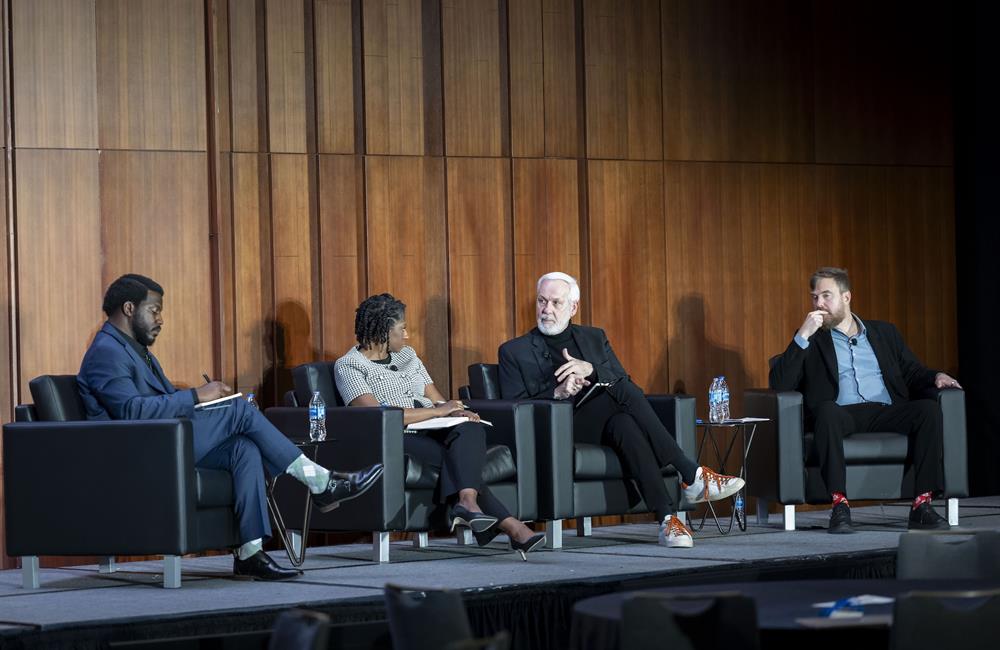
From left: Moderator Adam Harris of The Atlantic; Zakiya Smith Ellis of EducationCounsel; Paul J. LeBlanc, former president of Southern New Hampshire University; and Greg Lukianoff, president and CEO of FIRE, during the “Incisive Issues: Ideas That Cut Through Convention” session on Feb. 26.
During the Annual Meeting’s final main stage session Friday afternoon, the focus was on fostering student opportunity and success.
ACE’s Mushtaq Gunja, executive director of the Carnegie Classification Systems, noted that the
newly reimagined classifications showed that “almost every institution is either high access or high earnings,” and that on top of that the new Student Access and Earnings Classification found that there are 478 Opportunity Colleges and Universities that are both providing higher levels of access than expected and extraordinarily high earnings for their students after graduation.
“These are really to be celebrated,” Gunja said. “I can't wait to go tell and spread the story about our Opportunity Colleges and Universities.”
Later in that final main stage session, Anthony Abraham Jack, inaugural faculty director of the Newbury Center and associate professor of higher education leadership at Boston University’s Wheelock College of Education & Human Development, talked about his work exploring how institutions can do a better job spurring student opportunity and success, and then engaged in a conversation with students to further explore the topic.
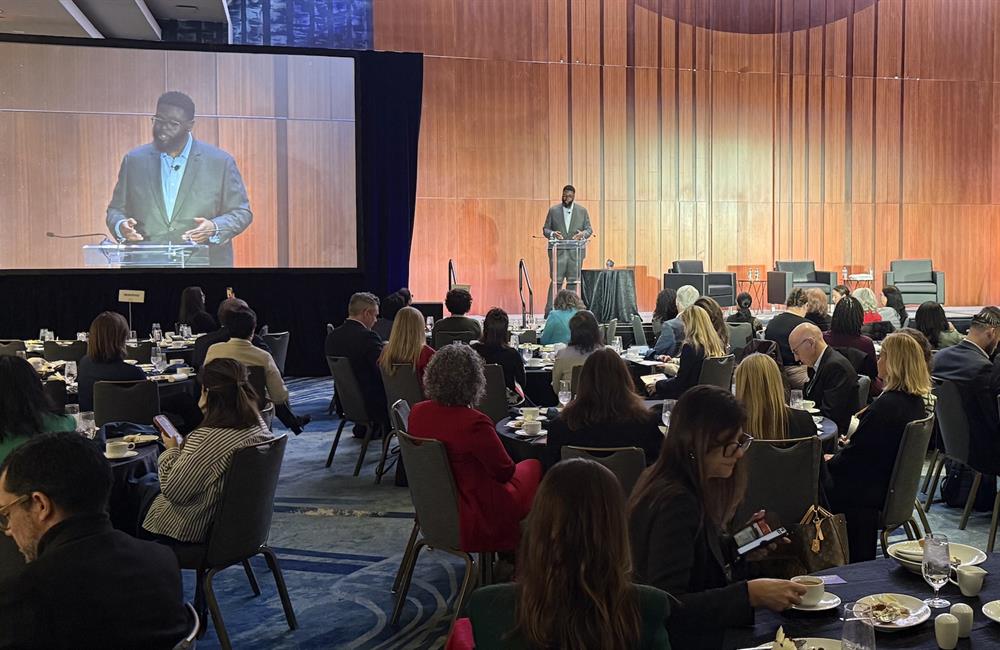
Anthony Abraham Jack of Boston University’s Newbury Center discusses reimagining college’s purpose during the “Beyond Prestige” closing plenary on Feb. 27. The session also featured Mushtaq Gunja of ACE and students Chris Moore III and Rebekah Hardy, focusing on social mobility and the revised Carnegie Classifications.
Ensuring that all students from all backgrounds have an equal shot at all types of student-work jobs is one way to spur opportunity and lower obstacles to success, Jack said. If institutions are to be effective engines of social mobility, “we must remove barriers that lead to unequal and separate undergraduate experiences,” Jack said.
Beyond the plenary stage, conversations continued in dynamic small-group sessions that pushed attendees to think boldly about what comes next. From exploring how AI will reshape higher education and forecasting the sector’s future to identifying ways to strengthen opportunities for military-connected learners, participants engaged in forward-looking discussions designed to translate ideas into action.
Special Events at ACEx2026 Bolster Attendees’ Experiences
ACEx2026 featured an array of special events that extended the energy and impact of the Annual Meeting well beyond the main stage.
At
ACE on the Hill, presidents and chancellors convened to hear from policy experts, exchange advocacy strategies, and sharpen their key messages before fanning out across Capitol Hill for meetings with dozens of congressional offices.
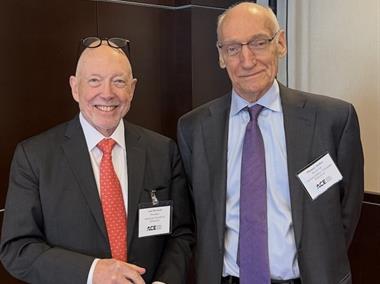
Ted Mitchell and Thomas Bailey, president of Teachers College, Columbia University before ACE on the Hill meetings.
ACE’s second annual Hill Day, featuring presidents and chancellors from 17 states, underscored the power of collective leadership and the importance of elevating higher education’s voice in federal policy conversations.
Following the Annual Meeting, two signature convenings—the Council of Fellows Gathering and the Women’s Network Leadership Conference—brought together leaders committed to mentorship, advancement, and community-building.
The events featured a joint reception Friday evening, celebrating the connections and shared purpose that continue to strengthen the higher education community.
Institutions and Leaders Honored with Annual Awards at ACEx2026
ACE honored annual award recipients at ACEx2026, celebrating institutions and leaders who are advancing bold ideas, expanding opportunity, and delivering meaningful results for students and communities.
The awards recognize transformative institutional leadership, sustained efforts to advance women’s leadership, and more. Together, the honorees reflect the breadth of work happening across campuses to strengthen student success, institutional effectiveness, and community impact.
Click here to see all award recipients.