Why College Matters
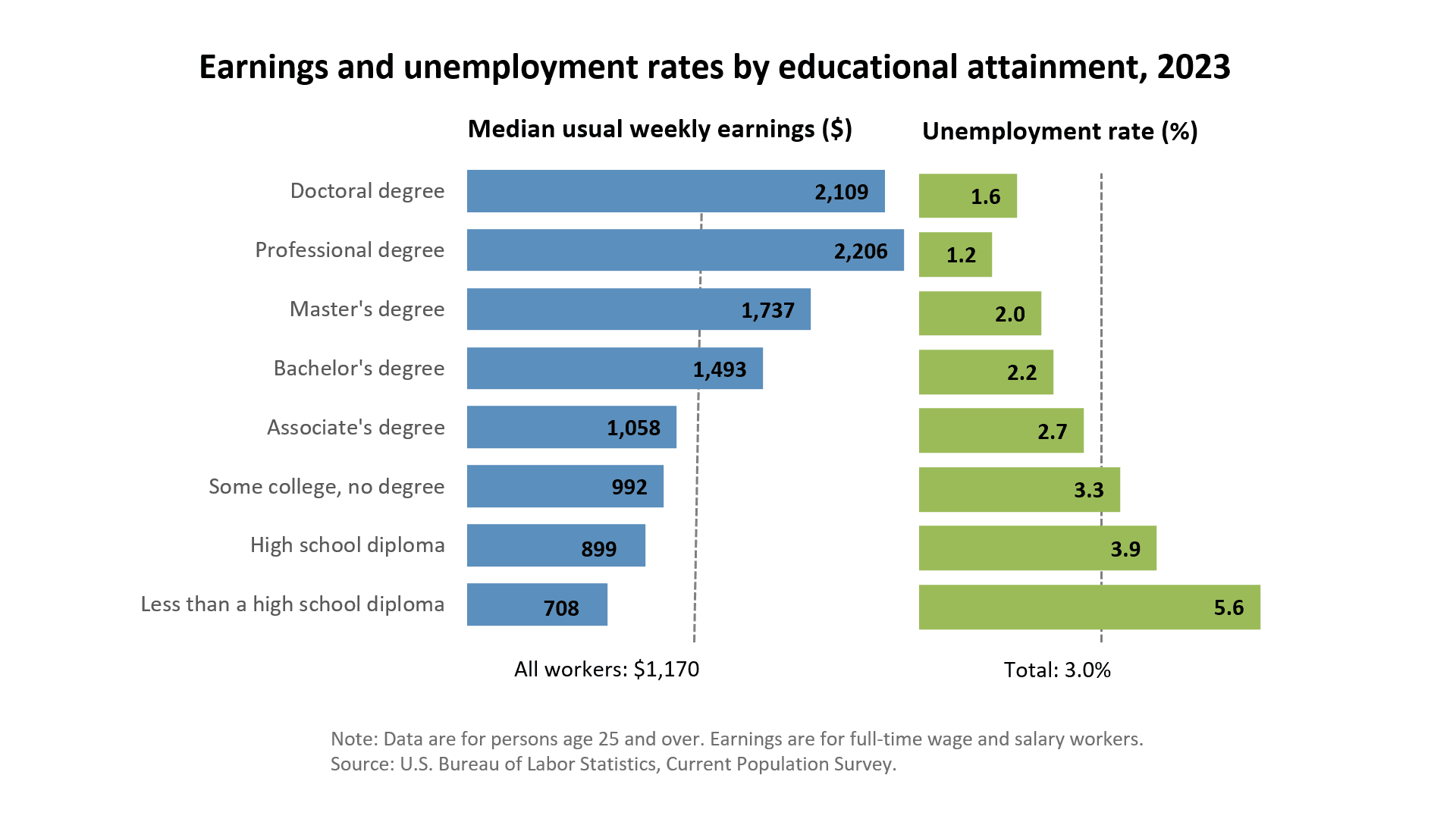
Higher education will determine the future of our nation. Often, income inequalities are driven by a lack of access to college. Not only are college graduates half as likely to be unemployed as those with only a high school degree, they are also more likely to vote and be leaders in their communities. The economic health and social viability of a democratic society is determined by the education of its citizens. We must remove the barriers to postsecondary education access.
What Is The American College Application Campaign?
The American College Application Campaign (ACAC) is a national effort to increase the number of first-generation and low-income students pursuing a college degree or other higher education credential. The primary purpose of this effort is to help high school seniors navigate the complex college admissions process and ensure they apply to at least one postsecondary institution. The effort occurs during the school day, with a focus on students who might not otherwise apply to college.

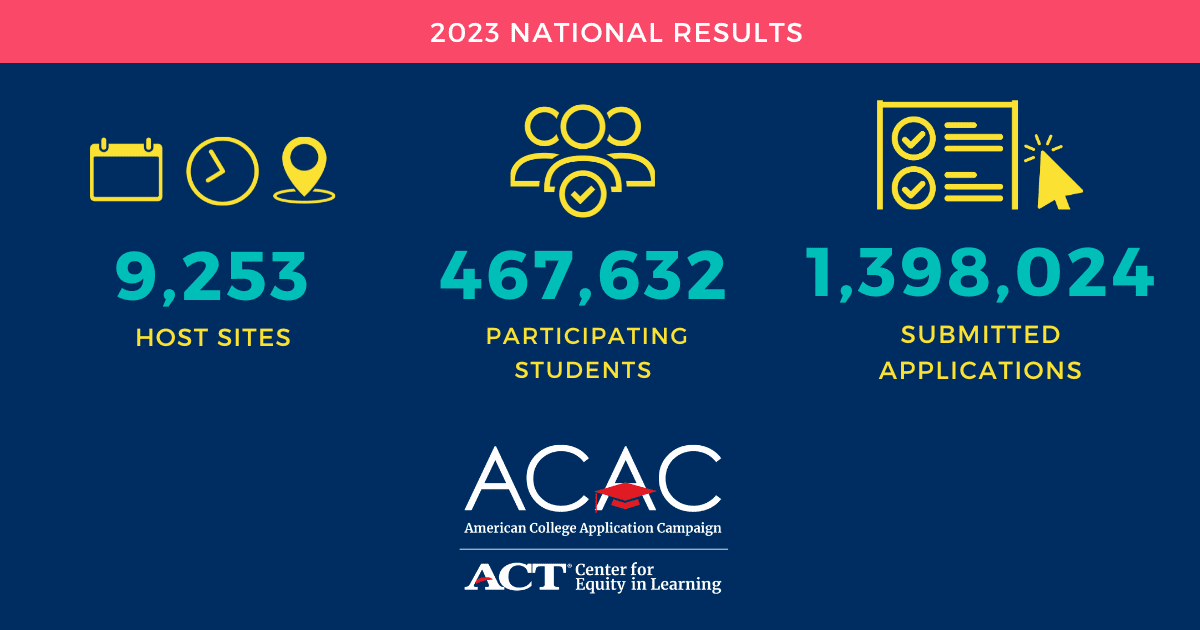
In 2012, ACAC programs took place in almost 1,600 schools in 24 states and the District of Columbia, highlighted in maroon on the map above. During 2012, over 110,000 students submitted more than 184,000 applications during College Application Campaign events. The campaign expands each year to include more states, high schools, and students. States committed to piloting College Application Campaign events in fall 2013 are highlighted in yellow. Click on a participating state to learn more about their program or see a list of all 2012 participating states.
ACAC also:
- Educates policy and decision makers in every state and territory about the importance and value of higher education
- Works to increase the number of citizens who pursue educational opportunities beyond high school
- Supports the creation of a better-prepared workforce
ACAC provides the following services at no cost to states and territories implementing an ACAC college application effort:
- Technical assistance
- Specialized training, webinars, and consultation
- Access to proven practices and resources
- Support with evaluation
To ensure success, states and territories are encouraged to:
- Organize a broad-based statewide steering committee with K–12 and higher education representatives and college access leaders
- Identify a primary contact person for their state
- Establish a timeframe for implementation
- Conduct a pilot project with five or more high schools in the first year
- Identify a period of time in October or November of each year to sponsor the ACAC event at a school and during the school day
- Report results
- Participate in an annual meeting to exchange proven practices
Evidence of its Impact
States that have put into place multiple educational access strategies, including ACAC events, have seen increases in low-income students' college participation rates.
"I think having the opportunity to apply in school lessened the stress that
I had about when I was going to find the time to apply."
- Georgia high school senior
"Ninety-one out of 153 students applied to college before Thanksgiving.
Our kids were so excited! May be my best day ever as a principal."
- Minnesota high school principal
Since piloting what was then College Application Week and other strategies
in 2008, Tennessee increased its higher education participation rate
among low-income students from 23.1% to 32.5%.
North Carolina began College Application Week in 2005 with one high
school. By November 2011, the event was sponsored in 488 high schools,
representing every district in the state, with 25,243 North Carolina students
submitting 61,854 applications.